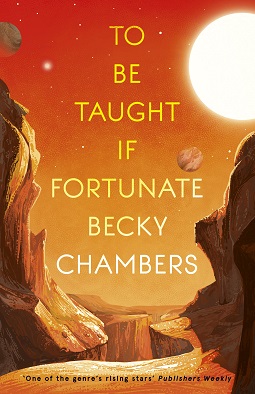
I went into this novella blind and finished it not entirely sure if I liked it or not, nor do I really know how to describe it. There’s little traditional plot, character development, or action. Instead, the story follows four astronauts exploring distant planets, told through logs sent back to Earth.
The story starts with a set of ideas on how slower than light travel could be possible, and how humans could adapt to different environments. It explores an independent space organization, and what space travel would look like if it was deeply rooted in ethics. The different planets have different conditions, different life, and require different adaptation. This part is all fun to read.
However, it ends abruptly, and not in a good way. From a character standpoint, they make a decision to essentially give up all agency and amounts to a time-delayed form of suicide. The reader is supposed to assume that more debate happens, but that debate never appears on the page.
What I did enjoy, though, is the central question the book poses. Is the pursuit of scientific discovery, knowing that it will have no practical application, still worthwhile? The book was written in 2019, and that question is even more relevant in 2026 as NASA's budget continues to be cut.
★★★★★☆☆ ⓘ